
BIM overall coordination
Every discipline coordinated, clashes prioritised and their resolution systematically tracked.
Why it matters
Clashes between structure, building services and fit-out that surface on site cost time and money, most of all where MEP and process installations are densest. Rigorous BIM coordination brings every discipline onto a single model before groundworks begin: conflicts are resolved in the model, not in the site diary. In regulated pharma and industrial environments this counts double, because on-site rework is costlier still. The result is a smoother construction programme, fewer variations and complete documentation for operations and FM handover.
How we work
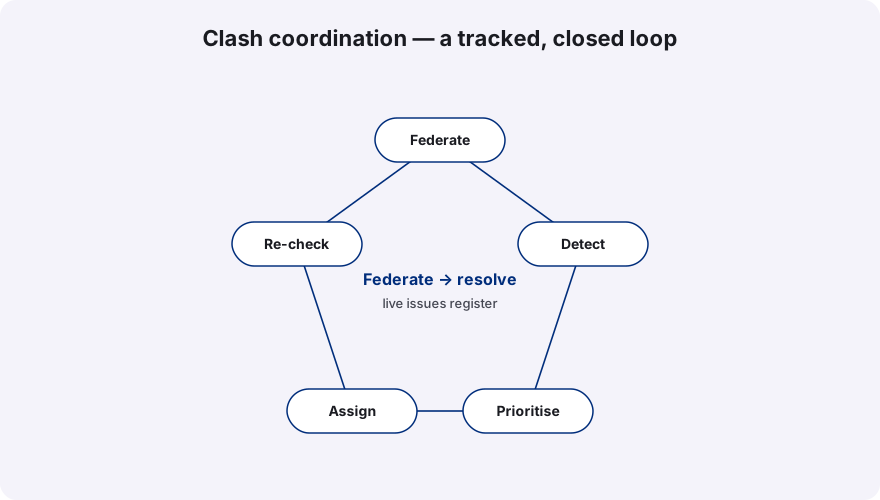
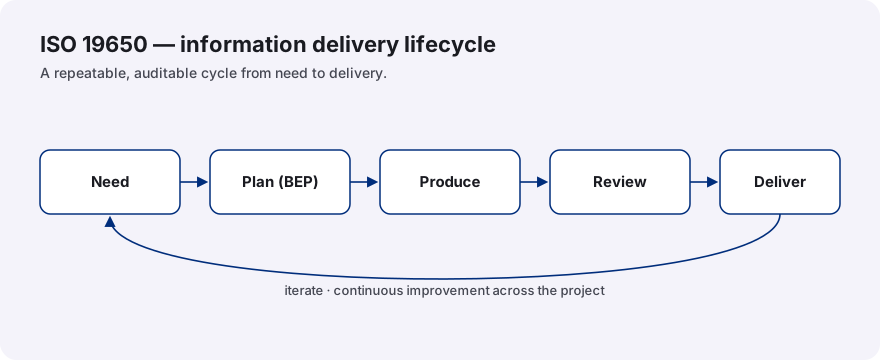
Our BIM coordination follows the information delivery process defined in ISO 19650-2 and aligns with the Swiss annex SIA 2051. We federate all discipline models (IFC) into a single coordination model, run geometric and rule-based clash detection, and maintain a central issues register (BCF) throughout the coordination cycle.
- Define the coordination plan: detection rules, responsibilities, cadence
- Federate discipline models on the agreed delivery schedule
- Run clash detection in Navisworks and/or Solibri; classify by priority
- Assign BCF issues, set deadlines, verify resolution
- Facilitate and minute coordination meetings
- Maintain the live issues register through to practical completion
What you receive
- Federated coordination model (IFC / native)
- Clash detection reports after each round
- Maintained BCF issues register with status tracking
- Coordination minutes and decision log
- Closing documentation for FM / handover
Discuss your project
Tell us about your project. We will show you how structured BIM coordination reduces planning risk.
Get in touch